
Agriculture is hereditary in our family. It started with Grandpa Slavko, continued with my father Josip, and now I have taken over the business, Antonio Poljak tells us, who attributes the high yield to crop rotation, irrigation, and technology.
In the village of Stari Gradac, not far from Virovitica, thirty-year-old Antonio Poljak cultivates 75 hectares of land, with his main production based on tobacco, which he grows on about ten hectares, depending on the year. He also rotates crops, growing corn, wheat, rapeseed, and sunflower.
“Agriculture is hereditary in our family. It started with my grandfather Slavko, continued with my father Josip, and now I have taken over the business. I have been intensively involved in it for 12 years already, and even as a kid, I helped as much as I could, especially during the summer. In general, everything in our family has always revolved around agriculture,” Antonio tells us.
The family farm was opened in 2003, although working the land has always been part of everyday life – from livestock farming and vegetable growing to the cultivation of tobacco and other crops. Over the years, the farm gradually expanded alongside the areas of arable land.
The higher the earnings on the smaller the area
Antonio graduated from a technical high school for computing, and in his youth, he was attracted to working with computers and thought about a career in IT. However, life’s path and family work directed him towards agriculture and working the land, to which he ultimately gave preference and remained in.
“We are not typical Slavonia in the sense that we have a lot of land. Both in the past and now, many people in Podravina have even less land and smaller plots, so it all came down to making more money on a smaller area. That’s why we chose high-income crops like tobacco and vegetables,” says Antonio.
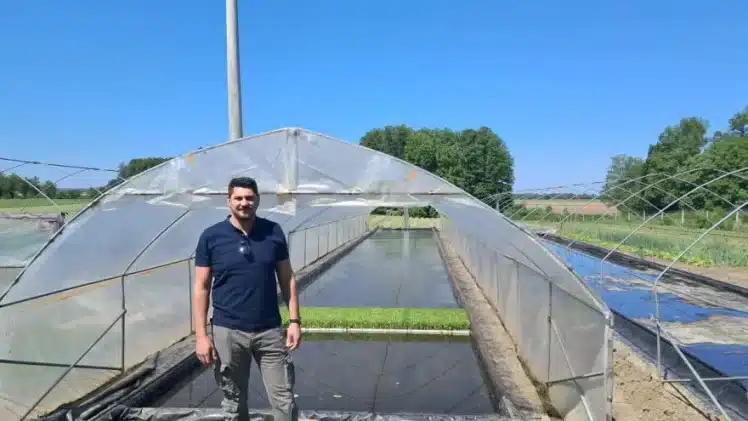
Last year, in terms of crops, was generally good. The key factor was the normal amounts of rainfall, which is of great importance in this area. The peculiarity of the location is that it often happens that in surrounding places, just five to ten kilometers away, it rains, while on their plots precipitation can be absent for a longer time.
“As for the tobacco itself, everything lined up very well. We had a very good climatic year and excellent quality. However, a frost came a little earlier, which eventually destroyed a part of it, and the same happened with other crops. We are trying to move towards higher investments and higher yields and so far we are doing quite well,” says Antonio.
Specific fertilizers and biostimulants
He has been irrigating the entire tobacco field for about 13 years, which allows for more stable production. He rotates other crops in the usual system and respects crop rotation whenever possible.
“Many years ago I started using the soil enhancer Physio Max for tobacco. I also used classic NPK fertilizers, and lately I use Greenstart the most, that is, starter microgranules. I applied them in corn and sunflower and I see quite a good improvement, especially when I sow corn after oilseed rape as a preceding crop, so I plan to continue using them. Also, I used Fertiactyl Starter in tobacco, and currently we have Duofertil Top 34 in the trial,” Antonio reveals to us.
He started collaborating with the company Timac Agro two years ago when he introduced the use of Greenstart microgranules. The product has shown good results, especially on sandy soils, thanks to the pronounced content of nitrogen, phosphorus, and the presence of trace elements.
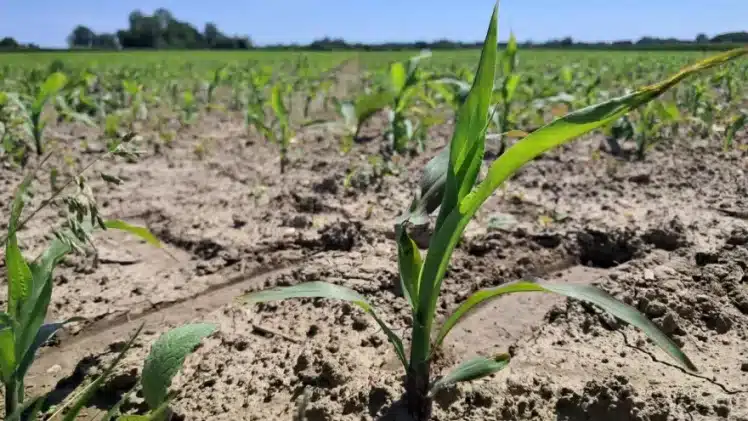
“After that, their Fertiactyl Starter was applied in tobacco production as a liquid biostimulator for roots and aerial biomass, with pronounced soil action and prolonged effect, which contributed to good quality,” tells us Ivan Jakovljević, sales representative of Timac Agra.
The collaboration was further enhanced by introducing soil analysis and selecting NPK fertilizers according to the specific analysis results, thus tailoring the production approach to the specific needs of individual plots.
“It is acidic soil that was quite poor in phosphorus and potassium. The humus was quite weak, which was to be expected because tobacco had been grown on these plots in previous years. Organic matter was constantly removed and not returned, and because of that, the lack of humus is evident,” adds Jakovljević.
Biostimulator korijena
Antonio je prihvatio savjete te je napravljena analiza tla, kao i odabir tehnologije u gnojivu prilagođen specifičnim uvjetima proizvodnje. Ove godine kukuruz je planiran na lošijim zemljištima, gdje se gnojivo pokazuje najučinkovitijim, osobito na kiselim tlima i parcelama slabije kvalitete, uključujući i ona u najmu te državne površine koje se intenzivno obrađuju, bez povrata organske tvari.
Na takvim lokacijama ostvaruje se maksimalan učinak zahvaljujući NPK formulaciji i pripadajućoj tehnologiji, koja uključuje makroelemente, povišene udjele sumpora i kalcija te prisutnost mikroelemenata.
“Mikrogranule za start sadrže Physio Pro tehnologiju koja potiče obnovu korijenskih dlačica u tlu. Budući da one prirodno odumiru svakih desetak dana, upravo su ključne za usvajanje hranjivih tvari i vode. Starter u duhanu posebno je važan kao biostimulator korijena, osobito kod povrća i kultura koje se presađuju“, naglašava Nina Misirača product specijalistica Timac Agra.
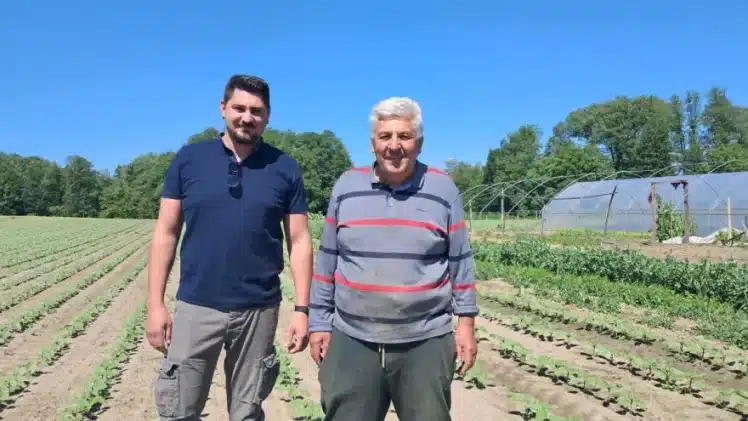
Young plants in the stage of transplanting from containers to open fields are exposed to stress, so at this stage it is necessary to provide them with support for faster recovery and continuation of vegetative growth.
“In the case of solid fertilizer for corn, it is a Duofertil TOP 34 NPK product that contains two key technologies. The Top Phos technology is suitable for acidic soils because it allows phosphorus uptake regardless of soil type. The second is MPPA Duo technology with organic acids that release binding sites for macro and microelements in the soil and improve their availability,” adds Nina.
This year, corn is showing good growth due to sufficient moisture and rainfall, but it is important to pay attention to root development.
“Under such conditions, shallower roots may develop, making it harder for the plant to access water and nutrients during dry periods. Our technology promotes the development of a deeper root system so that the plant can better withstand drought stress,” she concludes.
Future Plans
About ten years ago, Antonio opened a social media profile under the name AP Agro, and on his YouTube channel, he has posted around 130 videos showcasing different aspects of agricultural production.
“Nothing special – just my view on the charms of agriculture in our society and my personal experience. I try to show people how I see things and how I work. Sometimes I’m a bit less active, sometimes more. Now I am developing cooperation with colleagues from Timac and other companies, through trials and product tests. We try to show everyday problems, not just successes, but also what you deal with throughout the year. Especially the paperwork,” he says.
The experiences are mostly positive because through his activities, he has expanded the circle of acquaintances with whom he has exchanged opinions and experiences. Many contact him with various questions, follow his way of working, and show interest, and some of them even apply what they see. He believes that the experiences are generally good and that otherwise he would not have continued with it.
Antonio has many plans that are constantly present in his thoughts. He points out that his biggest challenge at the moment is that he does most of the work by himself, while his father, due to age and health problems, helps as much as he can.
“In recent years, we have largely modernized the machinery with newer technology, so dad is not as involved anymore. I am still missing another pair of male hands, but we are definitely trying to expand the land and infrastructure, improve the machines and production. That is always our goal. It is our only source of income and we invest almost everything into it,” concludes Antonio.


